Bubble Tea: Trans Fat Emulsion or Milk Colloid?
 image from Baidu picture hosted in QCloud
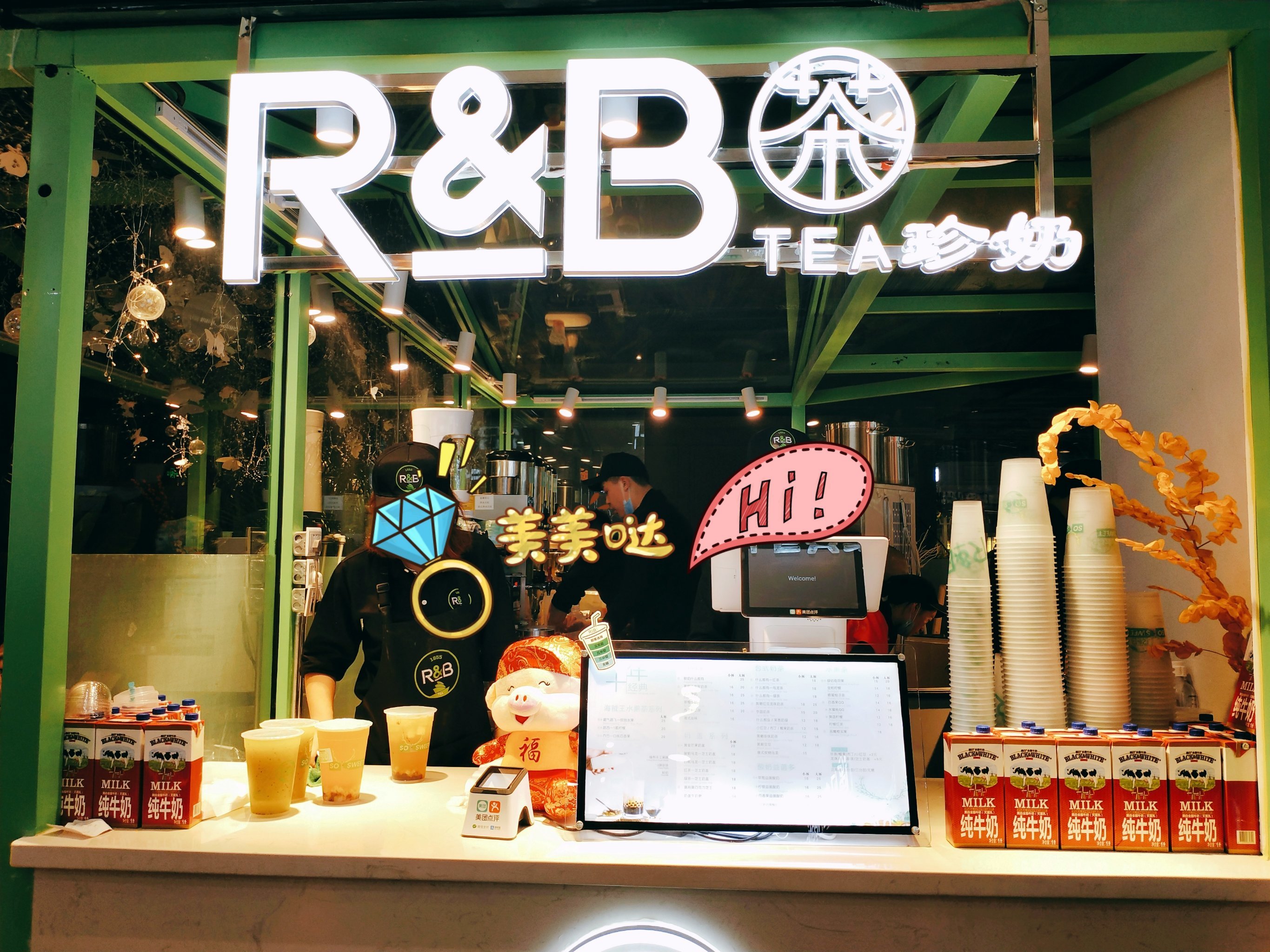
My Bubble Tea Journey Started in Chengdu
I first discovered bubble tea when I was studying in Chengdu. There was a brand called R&B that served huge cups, and my best friend and I would each grab one before heading out to Chunxi Street for shopping. We’d walk all the way from Sichuan University and back, sipping our drinks the entire time.
Later, whenever exam season rolled around, I’d get myself a big cup of bubble tea before heading to the study room. Buying that cup of sugary goodness always made me happy.
However, with a materials science background, I always had a rough idea of what was in these drinks. I deliberately didn’t look too closely, because I didn’t want to find a reason to stop drinking them. Blissful ignorance 🫣.
Fast forward to now—I live in Berlin, and this city has bubble tea shops! Some are familiar favorites like The Alley and Coco, while others, like Comebuy Tea, I’d never seen back in China. But something caught my attention: in China, more and more shops started emphasizing “we use fresh milk” and “0 trans fat” on their menus.
So what exactly was in that creamy white milk powder used in bubble tea before? And why are some shops now advertising “bio milk” in Berlin as a premium option?
The Mystery of the Creamy Tea
If you’ve ever tried to make bubble tea at home with regular milk and tea, you’ve probably noticed that it often comes out watery and thin. But when ordering from a shop, it’s insanely creamy and rich. What are they adding that you’re missing?
The answer is fat. And not just any fat—it’s oil that has gone through a serious transformation, turning liquid vegetable oil into that creamy white “milk” powder. You’ve probably seen baristas scoop it into your tea and then shake the cup aggressively to homogenize it.
The Thing About Fats: It’s All About the Bend
Fats are made of long chains of carbon atoms—imagine a string of beads. The shape of this chain matters a lot.
-
Saturated fats: Straight chains. They pack together tightly, which is why butter is solid at room temperature.
-
Cis fats: Kinked chains. Most plant oils have a natural “kink” in their molecular structure. This bend is called a cis configuration (meaning “same side”). Because the molecules can’t pack together tightly, oils like olive oil and sunflower oil stay liquid.
-
Trans fats: These have the same atoms as cis fats, just arranged differently. The atoms sit on “opposite sides” (trans = across), which straightens the molecule. This allows it to pack more tightly—somewhere between saturated fat and cis fat. Trans fats are mostly artificial and are typically a byproduct of trying to turn cheap liquid oils into solid or semi-solid fats.
 Fig. The difference between saturated, cis, and trans fats (Image ref [1]).
Hydrogenation: Turning Liquid Oil into Creamy Powder
So why take cheap vegetable oil and add hydrogen atoms to it? Hydrogenation means adding hydrogen (H) to carbon–carbon double bonds. This process turns liquid oil into solid or semi-solid fat and makes it more shelf-stable.
Partial hydrogenation
In partial hydrogenation, only some double bonds are hydrogenated. As an unwanted side effect, many remaining cis bonds flip into the trans configuration. Historically, this resulted in fats that could contain very high levels of trans fat.
This made partially hydrogenated oils perfect for creamy products:
- Semi-solid at room temperature
- Cheap
- Long shelf life
- Smooth texture
Unfortunately, trans fats are strongly associated with increased cardiovascular disease risk.
Complete hydrogenation
In full hydrogenation, all double bonds are removed. This produces fat with no trans fats—but also a very hard fat, with a melting point around 60–70 °C.
The solution: blend this fully hydrogenated fat with liquid oil. The result has a creamy texture without trans fats. It costs more, but it avoids the major health issues linked to partially hydrogenated oils.
What’s Actually in That “White Milk Powder”?
The white milk powder used in many bubble tea shops is usually called non-dairy creamer, or 植脂末 (zhí zhī mò) in Chinese. Historically, many creamers—especially before stricter regulations—used partially hydrogenated oils:
- Large fraction of partially hydrogenated vegetable oil
- Milk proteins (often sodium caseinate)
- Emulsifiers (to keep oil and water mixed)
- Anti-caking agents
- Stabilizers
In such formulations, a single scoop (around 25 g) could contain several grams of trans fat. The American Heart Association recommends limiting trans fat intake to less than 1% of daily calories—about 2 g per day for a 2,000-calorie diet.
Today, many manufacturers have reformulated their products:
- Fully hydrogenated oil blended with liquid oil, or naturally saturated fats like palm kernel oil
- The same proteins and emulsifiers
- Trans fats typically below regulatory limits (often <0.5 g per serving)
This is a significant improvement, though these products are still largely fat-based rather than dairy-based.
3-in-1 Instant Coffee: The Same Trick
This creamer chemistry isn’t unique to bubble tea. Walk into any German supermarket and you’ll find 3-in-1 instant coffee products. The promise is simple: “Just add hot water—no milk needed.”
So what’s actually in them?
Looking at the ingredient list: sugar, coffee whitener, glucose syrup, hardened palm kernel oil.
That hardened palm kernel oil is what creates the creamy mouth feel. The formula is essentially: coffee + sugar + creamer powder. Same creaminess, different drink.
 Image from amazon.de
The EU Rule: Why Trans Fats Matter
What’s the problem with trans fats?
Our bodies are good at processing natural cis fats. Trans fats, however, is associated with heart disease risk.
EU regulation (EU) 2019/649 limits industrial trans fats to no more than 2 g per 100 g of total fat in foods.
This means that bubble tea sold in Berlin should, in principle, comply with these limits.
The Lactose-Free Paradox
Here’s something interesting I noticed in Berlin bubble tea shops: even when the default option uses “white milk powder,” many shops advertise lactose-free milk as a premium upgrade.
Non-dairy creamer is typically very low in lactose. However, it often contains milk-derived proteins such as sodium caseinate, which matter for people with milk allergies (though not for lactose intolerance).
 Image from wolt.com
The irony:
- Default powder: very low lactose ✓, fat-based ✗
- “Lactose-free milk” upgrade: real milk ✓, no lactose ✓, costs more €€
- Regular milk (bio milk): real milk ✓, contains lactose ✗, costs more €€
- Oat/soy milk: plant-based ✓, no lactose ✓, costs more €€
So when you pay extra for lactose-free milk, you’re not just avoiding lactose—you’re paying to replace a fat-based creamer with actual milk.
A Practical Guide
If you’re ordering bubble tea in Berlin using Wolt or Lieferando, here’s what I’ve learned:
Better options (if available)
- Tea latte with fresh milk – Usually made with real milk
- Bio milk / organic milk – Still real milk; the key benefit is avoiding powdered creamer
- Lactose-free milk – Real milk without lactose and without hydrogenated oils
- Oat or soy milk – Plant-based and typically non-hydrogenated


 Images from wolt.com
Things to check
- Does “milk tea” mean real milk or creamer powder?
- If milk upgrades are offered, what’s the default base?
- Do they advertise “0 trans fat” or “fresh milk”?
The Happy Fat Philosophy
There’s a Chinese internet term for this: 快乐肥 (kuàilè féi)—literally “happy fat.” It’s the weight you gain from eating things that bring you joy, even when you know better.
I still order bubble tea, but now I make more informed choices. I look for fresh or bio milk options, and I pay attention to “0 trans fat” claims.
And then I enjoy gaining a little happy fat.
References
[1] IUFoST. Cis and Trans, Saturated and Unsaturated: What Does It All Mean? Scientific Information Bulletin (2020). https://iufost.org/iufostold/wp-content/uploads/2020/05/95-Cis-Trans-Satd-and-Unsatd.pdf